Being a woman in the public space—it’s rarely simple for me anymore. As a child, I could move freely and without fear. My mom tells me I was always worrying her because wherever I went I made new friends. Public bathrooms? Made new friends. Swimming pools? Made new friends. I would walk wherever without a second’s thought.
And then I became a woman and realized public spaces were not meant for me. I wasn’t meant to take up space with such reckless abandon; I was meant to be careful, cautious, and alert.
My first major foray into truly public spaces was when at eighteen I began regularly taking public transit to work and college. That was when I learned that some men would get off the bus and start following me and that the best thing to do was walk into a store and wait until they left. When I realized I should look behind me as I exited and always be aware of my surroundings. Where I discovered that fifty-year-old men with wedding rings wouldn’t care that I was eighteen when they flirted and, without shame, asked me if I had a boyfriend and what I thought I’d like sexually. Though, some would remove their wedding rings first, thinking I hadn’t noticed.
But nothing solidified this for me more than my church mission.
The number of men who literally chased my companion and me while calling out sexual epithets and explaining what they wanted to our bodies—countless. That’s when I understood a man could chase a woman while screaming at her in a crowd of people and nobody would step in or blink. That’s when I uncovered that when I walked there were two strategies to quickly learn if we were being followed without alerting the followers that I knew what they were doing: (1) turn my head to the side to face my companion directly and then using my periphery to look back or (2) using store windows as a mirror to check distance.
It’s where I recognized I should never stop when being followed no matter how large my group was and to keep walking into increasingly more and more public spaces, to note whether they were following us silently or loudly, and to check how many there were in the group and to quickly assess whether it was harmless teens yelling or something more than that. It’s when I discovered I should get off a train or bus right before the doors closed so they couldn’t follow me because they were still stuck on it. It’s when I comprehended that these men would pound the glass screaming at me because I had flung myself off the bus or train at nearly the last minute to escape.
It’s where I learned that on a crowded bus it’s better to stand near the sides and to face the wall because it was not as bad when they purposely pressed and aligned their body against your back as it was when you were face to face. It’s where I came to expect that the tax for being a woman in the public space was to be groped and to experience touch you had not asked for, that was unwanted, and that left you confused.
It’s where I understood that men in public spaces would feel comfortable enough to place their hands all over your body, completely unworried about being caught, where they would feel bold enough to slowly place their hands underneath your skirt, then underneath your underclothing, touch your skin, and then move their hands downwards in a slow dance to parts nobody else had ever touched. That you would be left speechless, voiceless, frozen like a statue, unable to move, to speak, to think, to scream, to do anything but stand and to receive this touch, all in a bus full of hundreds of people remaining unaware. It’s where you would finally find something in you to unfreeze and to move your head to meet his eyes and be met with a smirk while he slowly removed his hand, holding it up for you to look at before he walked away and exited the bus. When you would come to realize it would take you years to be able to speak about what had happened here, and several more to understand it.
It’s where men would feel confident enough to pin you to the side of the bus and rub their legs up and down over yours and move against you in a rhythm you never wanted to follow, in a dance you never asked to be a part of, where this time you would leave the bus in shame, not speaking to anybody about what had happened. Finally, finding your ability to move, you would run off the bus and your companions would say, “This isn’t our stop!” And all you’d be able to say in anger was, “I know!” because you were too ashamed to say anything else. Still an object. Still not a person, still not an “I.”
It’s where I embraced the fact I needed to fear and hate men I encountered (a lesson that was hard to unlearn); it’s where I learned that to be in public transit meant to put on a persona, to toughen myself, and to never make eye contact but never look at the ground. It’s where I learned that to be a woman in public was to be sexually harassed or assaulted every time.
When I came home from my mission, that didn’t change. I learned that a man would see me outside Dunkin Donuts using the free WiFi and approach with a request for a sexual favor. Where I re-learned that a man would rage when I didn’t talk to him enough or smile enough for him and turn to the men around me to say I wasn’t very friendly.
We live in a world that too often tries to tell women you don’t belong here. You’re not safe here. You shouldn’t be here. The reality of course is for too many women the most dangerous place they’ll be is with those in their own home and those they invite into their home or agree to go to their homes. And yet, so many of my worst experiences have been with men in public spaces who felt entitled to harass and assault. To seemingly whisper you should have known better than to be a woman in public. This is the price women pay for existing in public.
Of course, the solution we have come up with is to sell safety products for women, to tell women just don’t walk alone, don’t be out late, don’t use public transit, don’t be seen in public.Don’t. Don’t. Don’t.Some societies use this very fear and these very tactics to literally restrict women’s movement—to confine them to the home or to only walk with male relatives.
I can’t help but wonder what if we discussed the problem of men who feel entitled to public space and feel comfortable letting women know it doesn’t belong to them instead. What if instead of telling women don’t do this, we held men accountable when they harass or assault in public and said don’t do that and meant it when we said that. What would a world where women truly felt comfortable to claim public spaces look like? I’m not sure I’ve ever seen that world or if we’ve ever known it, but it’s a world I’d like to see. It’s a world worth creating.
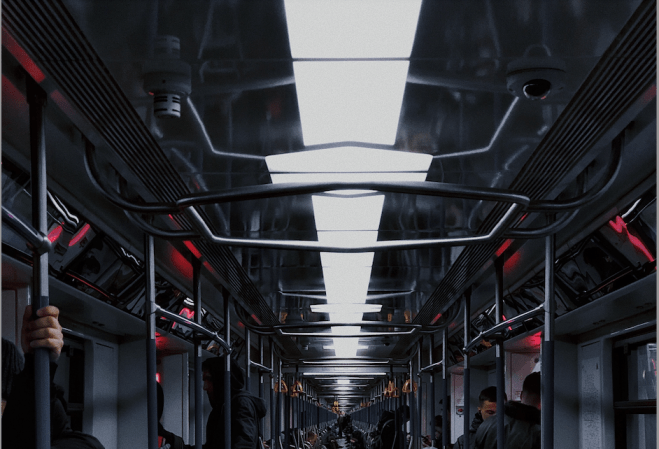
Photo courtesy of Maxim Shklyaev on Unsplash.
YOU MAY ALSO ENJOY:
 Half Drafted