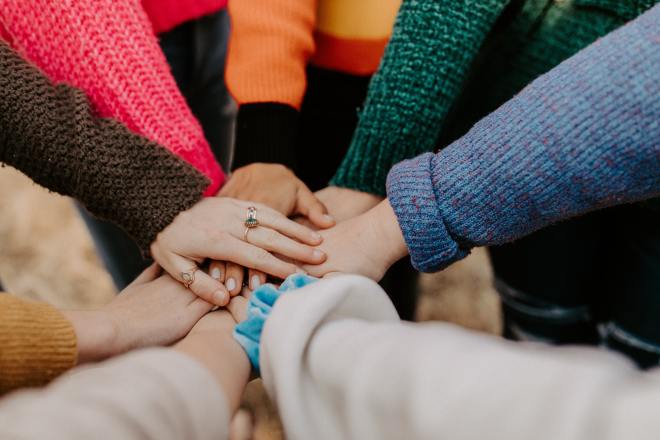
Community. Connection.
These matter deeply. We need them. And for many, Twitter offered that connection. They found community on that site. Many also found cesspools of misinformation and hate and clickbait outrage and hashtags like #taylorswiftisoverparty that caused deep depression and harm. Twitter also led to a lot of people doing their identity-building online to a public that has little tolerance for mistakes and little room for acknowledging growth. There were a lot of problems, and that can’t be understated.
However, many found vibrant, thriving communities. People found a space where they could connect with people who enjoyed the same niche interests, self-identified stay-at-home moms found a platform where they showcase their writing and create their business, and people found a place where they could engage in conversations they otherwise never would have been able to. People found a refuge there. They found community.
For me, I was able to connect with people from diverse backgrounds. I could listen in as Indigenous communities discussed their lives, the funny, and the pressing issues they saw as harming their community. I could witness disabled people articulate both how subtly and also explicitly they are excluded from society and what it means to exist in a world designed without them in mind. I could hear people from across the political spectrum engaged in discussions I otherwise never hear. I could experience religious leaders I’ve come to love and respect promote ideas and engage in discussions and problem solve.
I was a late user of Twitter, but I used it intentionally—to keep up on all things Taylor Swift and gymnastics, naturally. But more, importantly, to exist in and find spaces outside of my echo chamber. My friend group looks a lot like me—just twenty years older in many cases. And I intentionally went there to change that. It has been life-changing and made me better.
A lot of people have written about the implosion of Twitter. Sure, other sites will pop up. People will move on. Mastodon may become new Twitter, but it hasn’t yet and isn’t yet. There are still other sites, but Twitter signified community, and for a host of people who wanted to connect with an exchange of words and thoughts, it was home. But I’m not sure that’s the real loss or the most important part of the Twitter implosion.
What strikes me the most is the forced exodus. Unlike other moments in social media where people naturally and over time migrated to different sites or discovered new places they enjoyed, this is expulsion. This is a loss of community that feels sudden and uncontrollable. People aren’t really choosing to leave; they are leaving after realizing that the place they felt was home is no longer home. They are realizing that what they loved has become corrupted, unmanageable, distorted beyond recognition. It no longer feels safe. Somebody has come in and destroyed their community. Until what was home, no longer is home. It’s gone.
They are frantically searching for a new sense of community, a new place to belong—and for many, no other site represents that. They already fled Facebook for Twitter, don’t feel cool enough for Instagram or TikTok, and Mastodon feels confusing and unprepared for the new surge. Here, one person came in and destroyed what they loved.
While people celebrate the destruction (or mock it), for many they feel homeless. While it may pale in comparison to a host of other real problems and ills (for example, refugees who face forced migration at great peril), I think this loss of community warrants mourning (proportional to the harm caused, naturally). But there needs to be more space and recognition that people have experienced loss. And that this loss of community matters.
Photo courtesy of Hannah Busing on Unsplash.
 Half Drafted