
2021 is what I would call the year of middle-grade/picture books and the year of incredible women’s biographies.
Here are my Top 13 reads (excluding middle grade and picture books). Following the trend of 2020, I loosely tried to put these in order of my favorites. Then I included a slew of honorable mentions.
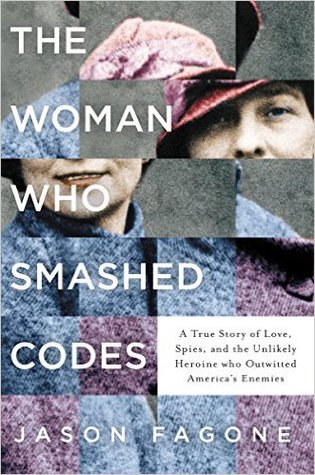
(1) The Woman Who Smashed Codes by Jason Fagone
I have now read a lot of books about the espionage and code breaking and intelligence side of the war and, in particular, women’s efforts during that time.
This was one of my favorites. Elizabeth Friedman was a truly remarkable woman. And once again, there was a man more than willing to take credit for her achievements—in this case, the infamous J. Edgar Hoover of the FBI.
Also, what a remarkable love story existed between Elizabeth and William too. An example of an incredible and enduring partnership between two remarkable individuals that still too rarely exists today.
I really recommend this one. Sometimes truth is stranger than fiction.
Definitely recommend this one for those who are interested in strong women, World War I/II, intelligence communities, or even prohibition and the coast guard.
I own a hard copy of this book, and I listened on audio. Any format would be good.
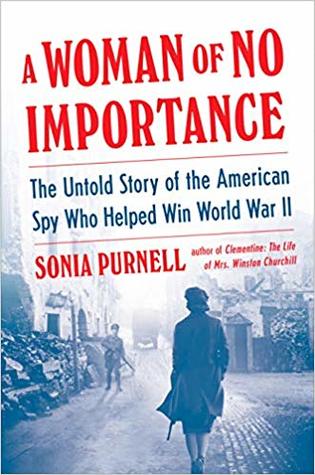
(2) A Woman of No Importance by Sonia Purnell
Virginia Hall is a woman that more people should know about. It’s why I’m so excited to see Sonia has written a middle-grade nonfiction novel on her as well. Virginia was a character! I would recommend this to anybody who is interested in WWII, a kick-a strong woman, spies, feminism, people with disabilities, history, etc. It’s just a really great, solid read.
She also wrote a book on Mrs. Churchill, which makes my honorable mentions below. An author I’m keeping an eye on.
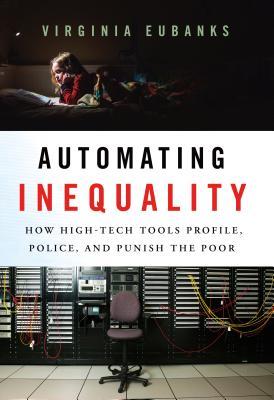
(3) Automating Inequality: How High-Tech Tools Profile, Police, and Punish the Poor by Virginia Eubanks
This book is horrifying in its accuracy. I knew going into this book that I’d be left feeling pretty awful about the direction we’re headed in it. And I was. We definitely need to make some changes and some changes fast.
The whole book was insightful and timely. One very apt quote: “Rational discrimination does not require class or racial hatred or even unconscious bias to operate. It only requires ignoring bias that already exists. When automated decision-making tools are not built to explicitly dismantle structural inequities, their speed and scale intensify them.”
And like she says, once they are scaled up, they can be nearly impossible to dismantle or reverse course.
She speaks about the history of how we’ve profiled, policed, and punished the poor throughout history and how while it shifts tactics to keep up with the times, it hasn’t changed. The same ideas prevail.
She specifically talks about the homelessness problem in LA and how they use a test in California to try to get the most at-risk homeless people off the street but how the data they are collecting is comprehensive, insecure, and given to police without a warrant, how automation harmed families who needed medical help in Indiana, and a test they have implemented to decide which children are at risk for abuse in PA. All three of these are horrifying, particularly the last one.
I learned a ton. We need to make changes and make them quickly.
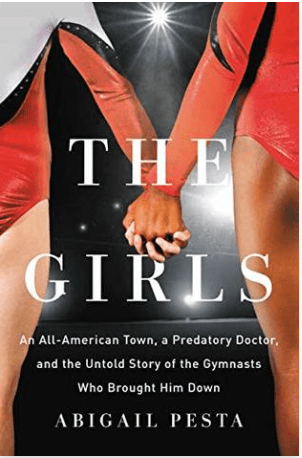
(4) The Girls: An All-American Town, a Predatory Doctor, and the Untold Story of the Gymnasts Who Brought Him Down by Abigail Pesta.
For those who prefer documentaries, check out Athlete A. Warning: this book will be very triggering for many survivors. Oh my heart! I didn’t always love the author’s writing style, but I gave it a five because of the content and its importance, and what it was about. This book explains why it is super important to have age-appropriate conversations with your children about sex and abuse and to do so often. Also, by abuse, I mean physical, emotional, and sexual.
This book is even more heart-wrenching than I thought it would be. I have followed this story closely and watched Athlete A. And though I knew a lot about the story. There was so much I didn’t know, and I have followed this story fairly closely. Through reading, I was reminded again of how many girls came forward and were not believed—way back in the 90s. They told coaches, counselors, teachers, police, etc., and were not believed.
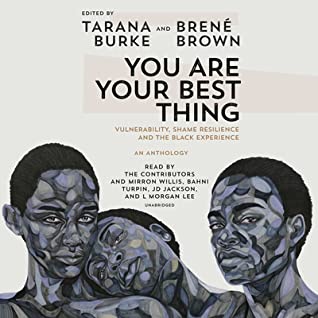
(5) You Are Your Best Thing: Vulnerability, Shame Resilience, and the Black Experience by Tarana Burke
So extremely powerful and a must-read. I loved this book. Some essays have strong content and language warning. So many of my favorite authors contributed here. Jason Reynolds and Yolo Akili Robinson’s essays surprised me with how powerful they were. I’ve been reading a lot of books by powerful Black women, and so it was nice to see and read some really poignant pieces by Black men. I’ll need to read more in that genre.
Regardless of whether you like Brene Brown or not, give this one a go! It’s very different than her books. I listened to this one on audio because I knew with some of the authors/essayists that would be the way to go and then also read it.
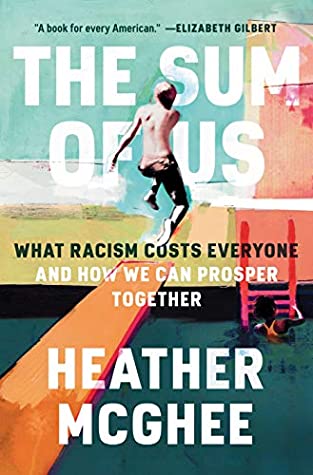
(6) The Sum of Us: What Racism Costs Everyone and How We Can Prosper Together by Heather McGhee
This book is phenomenal. A primer and overview in many ways, but the whole premise is based on a thought I’ve seen other books touch upon but not fully dive into.
The idea is that people throughout history have purposely tried to divide poor white and Black people and other people of color. Because we don’t want to be the bottom of the heap. And because of that, we all suffer.
Again, this is a premise other books have explored but not one that has been fully explored in others. That’s the theme of this book and the. She gives example after example to show how it hurts us all. And how we can overcome it.
This is also one of the first books I’ve seen that fully explored how whites are hurt by racism. I think this book is brilliant.
Note: for those reading on ebook, I was getting frustrated at what I thought was the lack of inclusion of sources. In my ebook, they didn’t show up as footnotes or references. Rather, they showed up at the end of the book. I didn’t find a way to connect the sources back to the claims, but the sources start by outlining the phrase the sources connect to. I think this is a bad design and hope the publisher fixes the ebook so, like other books, it is easy to navigate between sources and the body text. I did not, however, knock the author for that.
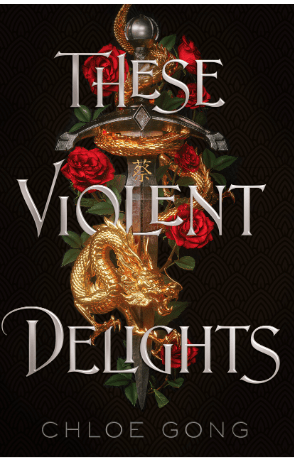
(7) These Violent Delights by Chloe Gong
I read a lot of fiction this year, but a lot of it was average or slightly above average. But this is one that stood out. It was an extremely imaginative retelling of Romeo and Juliet set in 1920s Shanghai. It also had a great cast of characters.
This hit the sweet spot for retellings of just familiar enough to be recognizable and feel comfortable and just different enough to be a real treat.
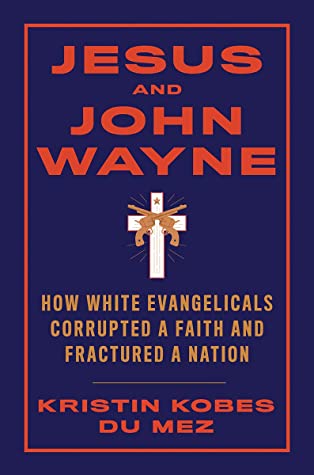
(8) Jesus and John Wayne: How White Evangelicals Corrupted a Faith and Fractured a Nation by Kristin Kobes Du Mez
This one was very well-researched and very thought-provoking. Reading it constantly made me feel like I needed to take a shower to wash all the grime I was reading about off me (but in the best of ways). It was enlightening in a horrifying way. This book does a great job of showing how things progressed and built upon each other to get to the current moment.
I know and respect many evangelicals who are very sincere and grounded in their faith and are very good people. This book did a good job of exposing the celebrity evangelical and cultural evangelical and the problems that the movement has caused. (Want it to be very clear I greatly respect evangelicals.) I know a few thought it was dry, but I really liked it.
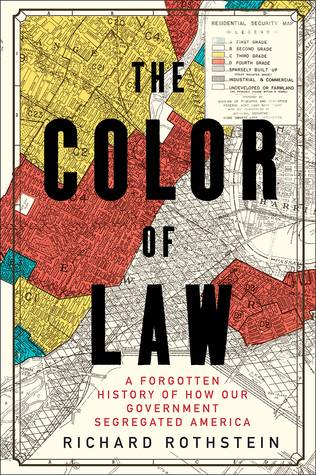
(9) The Color of Law: A Forgotten History of How Our Government Segregated America by Richard Rothstein
I really enjoyed this book. I learned a lot of new things about our country and our laws. A must-read for everybody who wants to better understand redlining, sundowns, and disparity in housing. It is written in a very accessible, approachable manner. It is a bit dry at times, but overall, the author does a great job presenting this material in a way that most will be able to appreciate.
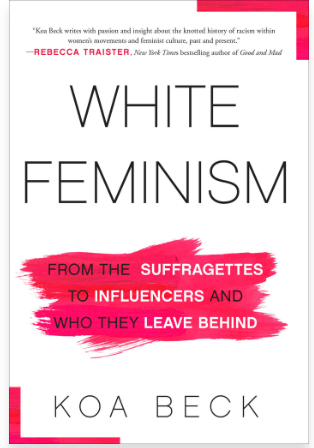
(10) White Feminism: From the Suffragettes to Influencers and Who They Leave Behind by Koa Beck
I’ve read a lot on this topic, and I like all of them for different reasons. Many of them that I enjoyed are listed in the honorable mentions below. I like all of them for different reasons and would recommend all of them for different reasons.
I like this one because it’s SO accessible. It explains what feminism is so clearly. The tagline summarizes this book very well. This book hits everything directly on the head, and I see the problems Beck illuminates everywhere, Particularly with influencer-led feminism.
(11) Until We Reckon: Violence, Mass Incarceration, and a Road to Repair by Danielle Sered
This book touches on a voice that is often left out in discussions of criminal justice and reform—the victim. It is super insightful. And while readers may not agree with everything the author presents, it is worth exploring.
Our criminal justice is often not healing for victims and requires no accountability for criminals or those who commit wrongs. Her additions and reflections to Bryan Stevenson’s work were particularly insightful. The portions about what true healing look like and also accountability for wrongdoers and what that looks like—it’s why this is a must-read, along with her insights about how people fall into multiple roles.
Are there ways we could do better as far as victims are concerned? Danielle Sered certainly thinks so. And I think she’s right.

(12) Tomorrow Will Be Different: Love, Loss, and the Fight for Trans Equality by Sarah McBride
This book has so many good quotes and ideas! One of many: “There’s a saying that goes, ‘If you’re not at the table, you’re on the menu.’ . . . A government cannot be ‘of the people, by the people, and for the people’ if wide swaths of the people have no seat at the table, if large parts of the country feel like there is literally no one in their government who can understand what they are going through.”
“Compromise is often necessary [in politics], but entire marginalized identities are not expendable chess pieces.”
This book was incredible and very enjoyable. I loved how Sarah crafted her story and paid homage to the man she loved and also stressed the importance of allowing people to be their complete selves. Trans people are often the forgotten ones when it comes to the LGBTQ movement.
I particularly enjoyed her recounting of her experiences in Delaware. It’s a great opportunity to set aside caricatures. A very clean book, other than one chapter that says the “f” word a few times.
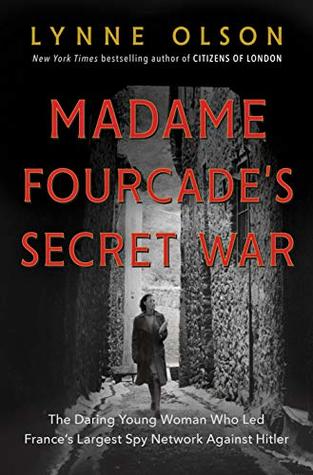
(13) Madame Fourcade’s Secret War: The Daring Young Woman Who Led France’s Largest Spy Network Against Hitler by Lynn Olson
As this list alone shows, I’ve now read a lot in this genre. This is one of the better ones.
War is such a sad thing. However, they have also been full of courageous women and men who risked and dared greatly. They are full of stories of courage, passion, conviction, and, yes, sacrifice. I’ve enjoyed learning more about these individuals this year.
Madame Fourcade was an incredible woman who seemed to care deeply about those in her network. What a fascinating story and one that deserves to be remembered and told. I enjoyed the book and the writing.
Worth Noting as a surprisingly good fiction read and best of the year: Under the Udala Trees by Chinelo Okparanta. This was so close to a five. The first few pages were captivating. The writing was beautiful, and I was completely hooked. And then it went down slightly to make this a four. I felt the back-and-forth timeline wasn’t always well done, and it fizzled a bit. Having said that, it’s been a long time since I read writing this beautiful as this one when it was clicking. And this is still a favorite of mine. Very enjoyable. Adult 18+.
Honorable Mentions:
–Code Name: Lise: The True Story of the Woman Who Became WWII’s Most Highly Decorated Spy by Larry Loftis
–Against White Feminism: Notes on Disruption by Rafia Zakaria
–White Tears/Brown Scars: How White Feminism Betrays Women of Color by Ruby Hamad
–Entitled: How Male Privilege Hurts Women by Kate Mann
Eloquent Rage: A Black Feminist Discovers Her Superpower by Brittney Cooper
–The Matriarch: Barbara Bush and the Making of an American Dynasty by Susan Page
–Clementine: The Life of Mrs. Winston Churchill by Sonia Purnell
–Better, Not Bitter: Living on Purpose in the Pursuit of Racial Justice by Yusef Salaam
–Restoration: God’s Call to the 21st Century World by Patrick Q. Mason
–Proclaim Peace: The Restoration’s Answer to an Age of Conflict by Patrick Q. Mason and J. David Pulsipher
–The Immortal Life of Henrietta Lacks by Rebecca Skloot
–Mediocre: The Dangerous Legacy of White Male America by Ijeomo Olou
–Everybody Lies: Big Data, New Data, and What the Internet Can Tell Us About Who We Really Are by Seth Stephens-Davidowtiz
–Toxic Inequality: The True Costs of Poverty and Racial Injustice for America’s Families by Thomas Shapiro
–Invisible No More: Police Violence Against Black Women and Women of Color by Andrea J. Ritchie
Photo by Debby Hudson via Unsplash license
YOU MAY ALSO ENJOY:
Best Non-Fiction Books of 2020
 Half Drafted